
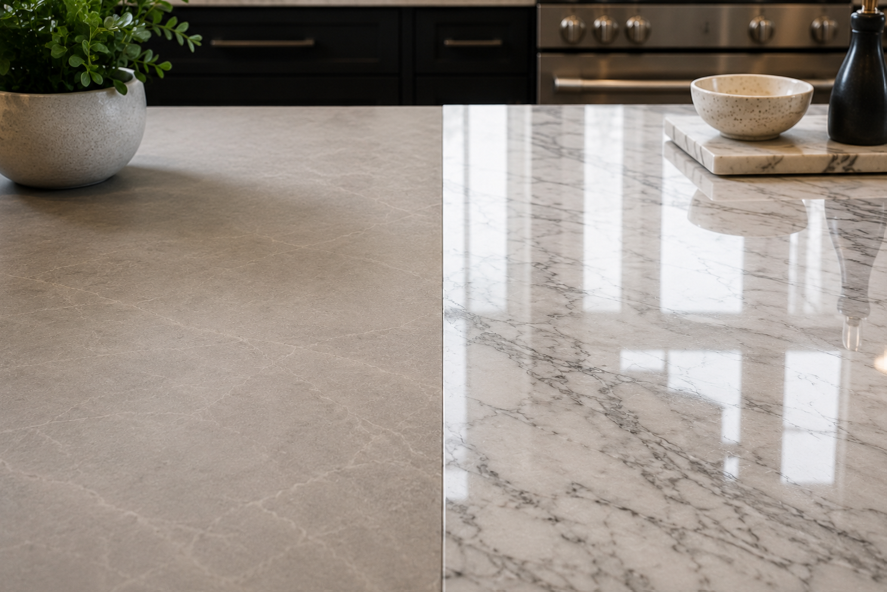
Choosing a countertop material is only part of the design decision. The finish matters just as much. A slab of quartz, granite, marble, or another surface can look completely different depending on whether it has a honed or polished finish.
For Montana homeowners, that choice can shape the whole feel of a kitchen, bathroom, home bar, or built-in entertainment space. A polished countertop can make a room feel brighter and more refined. A honed countertop can create a softer, more relaxed look that pairs beautifully with rustic wood, natural stone, and mountain-modern design.
At Missoula Floors, homeowners can compare surface options that fit the way Western Montana homes are actually lived in, from busy family kitchens in Missoula to cozy cabins near Stevensville, lake homes around Polson, and updated bathrooms in Hamilton.
The right finish comes down to style, maintenance, lighting, durability, and daily use. Let’s look at how honed and polished countertop finishes compare.
What Is a Honed Countertop Finish?
A honed countertop has a smooth, matte, or low-sheen surface. Instead of reflecting light like a mirror, it absorbs light and creates a softer appearance.
This finish is often described as natural, understated, velvety, or organic. It works especially well in homes where the design leans warm, rustic, relaxed, or modern without feeling glossy.
Honed finishes are popular on materials such as:
Granite
Marble
Quartz
Quartzite
Soapstone
Limestone
Some porcelain surfaces
In a Montana kitchen, a honed finish can feel right at home beside wood cabinetry, stone fireplaces, matte black hardware, warm flooring, or textured backsplashes. It has a calm look that does not compete with the rest of the room.
Honed countertops are also appealing because they feel less formal. A polished marble-look surface may feel elegant and bright, while the same pattern in a honed finish may feel softer and more lived-in.
That makes honed finishes a strong fit for mountain-modern kitchens, rustic cabins, farmhouse-inspired interiors, and bathrooms where homeowners want a spa-like feel.
The main point to remember is simple: honed surfaces reduce shine and create a more natural look.
What Is a Polished Countertop Finish?
A polished countertop has a glossy, reflective surface. It is buffed to bring out shine, color depth, and pattern definition.
This is the finish many homeowners picture when they think of granite, marble, or stone countertops. It can make veining appear sharper, colors look richer, and the room feel brighter.
Polished finishes are common on:
Granite
Marble
Quartz
Quartzite
Porcelain
Engineered stone surfaces
A polished countertop can work beautifully in kitchens and bathrooms that need light, clarity, or a more finished look. In spaces with limited natural light, the reflective quality can help brighten the room.
Polished finishes often suit:
Classic kitchens
Modern kitchens
Bright bathrooms
Home bars
Open-concept spaces
White or light cabinetry
Dramatic stone patterns
Rooms with elegant lighting
In a Missoula home with white cabinets and stainless appliances, a polished countertop can keep the space crisp and clean. In a Hamilton bathroom, polished stone can add a more refined look to a vanity area. In a Polson lake home, a light polished countertop can help bounce natural light through the room.
The main point: polished surfaces add shine, reflection, and visual clarity.
The Main Difference Between Honed and Polished Countertops
The biggest difference is the level of shine.
A honed finish is matte or low-sheen. A polished finish is glossy and reflective.
That difference affects more than appearance. It can also change how the countertop handles light, shows marks, feels to the touch, and fits into the room’s overall design.
A honed countertop usually feels softer and more relaxed. It can make stone patterns appear more muted. This is helpful when you want a countertop to blend naturally with warm wood, earthy colors, and textured finishes.
A polished countertop usually feels brighter and more formal. It brings out depth, movement, and contrast in the material. This is helpful when you want the countertop to stand out as a feature.
Think of it this way:
Honed finish: soft, matte, natural, relaxed
Polished finish: shiny, reflective, bold, refined
Neither option is automatically better. The best choice depends on the room, the material, and how you want the space to feel.
For busy homes, maintenance expectations also matter. Some honed stones may show oils, fingerprints, or marks more easily. Some polished stones may show water spots, smudges, or scratches depending on the material and color.
That is why comparing physical samples is so useful. A finish can look very different in your home’s natural and artificial lighting.
Pros of Honed Countertop Finishes
Honed countertops have a warm, natural look that works beautifully in many Montana homes.
One of the biggest benefits is the softer appearance. A honed finish does not create the same bright reflection as a polished surface, so it can feel calmer and more grounded. This is ideal for homeowners who prefer a relaxed kitchen or bathroom rather than a glossy showpiece.
Honed finishes also pair well with natural materials. If your home has wood cabinetry, stone accents, matte hardware, or earth-toned flooring, a honed countertop can feel balanced and intentional.
Another benefit is style flexibility. Honed countertops can work in rustic kitchens, modern spaces, farmhouse interiors, and mountain homes. They are especially popular in designs that use black, charcoal, soft white, warm gray, taupe, or natural stone patterns.
Honed surfaces can also reduce glare. This may be helpful in bright Montana homes with large windows, strong daylight, or reflective finishes nearby. Instead of bouncing light sharply, the surface creates a more subtle glow.
A honed finish can make some materials feel more custom as well. Marble, granite, and quartzite often take on a softer, more organic look when honed.
In short, honed countertops are a great choice when you want a surface that feels natural, comfortable, and quietly stylish.
Cons of Honed Countertop Finishes
Honed finishes are beautiful, but they come with a few practical considerations.
Because the surface is matte, marks can sometimes show more easily than they would on a polished surface. Depending on the material and color, fingerprints, oils, crumbs, water marks, or light smudges may be more noticeable.
This is especially true with darker honed surfaces, such as black granite or dark soapstone. They can look stunning, but they may show handprints or oils from daily use.
Some honed natural stones may also need more attention when it comes to sealing. Marble, limestone, and some granites can be more porous, and a honed finish may not repel stains as effectively as a polished one. The exact care needs depend on the material.
Honed finishes can also make colors look softer or less dramatic. For some homeowners, that is a benefit. For others, it may feel too muted, especially if they selected a slab for its bold veining or rich color.
There is also a design consideration. In very dark rooms, a honed surface may absorb light rather than reflect it. If the kitchen already has dark cabinets, low natural light, and matte finishes, the space may need lighter countertops, warmer lighting, or brighter wall colors to feel balanced.
Honed finishes are best for homeowners who appreciate a natural, softer look and are comfortable with a surface that may show signs of daily life more visibly.
Pros of Polished Countertop Finishes
Polished countertops are popular because they look bright, clean, and refined.
One of the biggest benefits is light reflection. A polished finish can help a kitchen, bathroom, or home bar feel brighter by bouncing light around the room. This can be especially useful in smaller spaces or rooms with limited windows.
Polished finishes also bring out the depth and movement of the countertop material. Granite flecks, marble veining, quartz patterns, and porcelain designs often appear sharper and more defined with a polished surface.
That makes polished countertops a strong choice when the surface is meant to be a focal point.
Polished finishes work well with many design styles, including traditional, transitional, modern, and luxury-inspired interiors. They can make a kitchen feel more finished and a bathroom feel more elevated.
Another practical benefit is that polished natural stone is often less porous than the same material in a honed finish. This can help with stain resistance when the material is properly sealed and maintained. The exact performance still depends on the surface type.
Polished finishes are also easy to coordinate with shiny fixtures, stainless appliances, chrome faucets, glass tile, and bright lighting.
For homeowners who want countertops that feel clean, polished, and visually striking, this finish is a dependable option.
Cons of Polished Countertop Finishes
Polished countertops are attractive, but they are not perfect for every home.
The glossy surface can show smudges, fingerprints, water spots, and streaks, especially on darker colors. A polished black countertop can look dramatic, but it may need more frequent wiping to keep that clean reflective look.
Scratches can also be more noticeable on some polished surfaces because the shine highlights changes in texture. This varies by material. Granite and quartzite are generally harder than marble, while engineered surfaces have their own care guidelines.
Another point to consider is glare. In homes with large windows, bright overhead lighting, or strong sun exposure, a polished surface may reflect more light than some homeowners prefer.
Polished finishes can also feel more formal. That may be perfect for a refined kitchen or bathroom, but less ideal for a relaxed cabin-style space or a rustic entertainment area.
If your home has a lot of matte textures, reclaimed wood, natural stone, and warm finishes, a polished countertop might feel a little too shiny unless it is balanced with the right colors and materials.
Polished finishes are best for homeowners who like brightness, shine, and clear pattern definition, and who do not mind regular wiping to maintain that fresh look.
Which Finish Is Better for Kitchens?
For kitchens, the right finish depends on how the space is used and what style you prefer.
A polished finish is often a strong option for kitchens that need brightness. If your kitchen has darker cabinets, limited daylight, or a smaller footprint, a polished countertop can help the room feel more open.
Polished finishes are also useful when you want the countertop pattern to stand out. A dramatic granite, marble-look quartz, or veined porcelain surface can become a beautiful design feature.
A honed finish works well in kitchens where warmth and texture matter more than shine. It is a great fit for rustic, farmhouse, mountain-modern, or organic designs. If your kitchen already has wood tones, matte hardware, stone accents, or warm lighting, honed countertops can feel very natural.
For active family kitchens, care expectations are important. If fingerprints and daily marks bother you, compare samples before deciding. Some honed dark surfaces may show more oils, while some polished dark surfaces may show more streaks.
A balanced approach is to choose the finish based on both style and maintenance:
Choose honed if you want soft, natural, and relaxed.
Choose polished if you want bright, glossy, and refined.
For many Montana kitchens, either finish can work well when paired thoughtfully with cabinets, flooring, lighting, and hardware.
Which Finish Is Better for Bathrooms?
Bathrooms have different needs than kitchens because moisture, lighting, and cleaning routines play a bigger role.
Polished finishes are popular in bathrooms because they feel clean and bright. They pair well with mirrors, chrome fixtures, polished nickel, glass shower doors, and glossy tile. In smaller bathrooms, a polished vanity countertop can help reflect light and make the room feel more open.
Honed finishes are also beautiful in bathrooms, especially when the goal is a calm, spa-like design. A honed white, warm gray, or soft stone-look surface can make a bathroom feel relaxed and inviting.
For powder rooms, either finish can work beautifully because the surface may not receive the same level of use as a primary bathroom. This makes powder rooms a good place to choose a more distinctive finish or material.
In primary bathrooms, think about daily routines. Toothpaste, cosmetics, soap, water, and hair products may all land on the countertop. The finish and material need to suit regular cleaning.
A polished quartz or polished stone surface can be practical for homeowners who want a bright, easy-to-wipe vanity. A honed surface can work well too, especially in lighter colors or materials designed for bathroom use.
The best bathroom finish is the one that matches the look you want and fits the level of daily care you prefer.
Which Finish Works Best With Montana Design Styles?
Western Montana homes often blend natural textures, practical layouts, and comfortable design. That makes both honed and polished finishes useful in different ways.
For rustic homes, honed finishes often feel more natural. They pair well with wood cabinets, bronze hardware, stone backsplashes, and warm flooring. A honed granite or honed quartz surface can bring a grounded look to a cabin-inspired kitchen.
For mountain-modern homes, either finish can work. Honed countertops can create a calm, architectural look, especially in charcoal, white, or concrete-inspired colors. Polished countertops can add brightness and contrast, especially when paired with sleek cabinets and simple hardware.
For traditional homes, polished finishes often feel classic. They work well with decorative cabinet details, warm lighting, and timeless stone patterns.
For lake homes near Polson, polished light countertops can reflect natural light beautifully. Honed finishes can also work if the design leans relaxed, airy, and understated.
For family homes in Missoula, Superior, Stevensville, and Hamilton, the right finish often comes down to daily use. A countertop needs to look good, feel comfortable, and fit the pace of the home.
If your home already has many glossy surfaces, honed countertops can add balance. If your home feels dark or heavy, polished countertops can add brightness.
Maintenance Differences Between Honed and Polished Finishes
Maintenance depends on both the finish and the countertop material.
A honed marble countertop will not perform the same way as a honed quartz countertop. A polished granite surface will not have the same care needs as polished marble. That is why material choice matters just as much as finish.
In general, honed finishes may show oils, fingerprints, and marks more easily, especially in darker colors. Some honed natural stone surfaces may also need sealing to help protect against staining.
Polished finishes may show water spots, streaks, and smudges more clearly because of the shine. They can also highlight scratches on softer materials.
Simple care habits help both finishes:
Wipe spills promptly.
Use cutting boards.
Use trivets under warm pans or appliances.
Clean with products recommended for the material.
Avoid harsh cleaners that can dull or damage the surface.
Follow sealing guidance for natural stone.
For busy kitchens, quartz and porcelain options may offer a wide range of looks with practical care. Natural stone can be beautiful too, especially when homeowners understand the maintenance involved.
The smartest choice is the one that matches both your design goals and your daily routine.
How Lighting Changes the Look of Each Finish
Lighting can completely change how honed and polished countertops appear.
A polished countertop reflects light. In a bright kitchen, that can make the room feel open and fresh. In a room with intense sunlight, it may create more glare. In a darker space, it can help lift the overall look.
A honed countertop absorbs more light. In a bright room, this can create balance and softness. In a dark room, it may make the space feel more subdued unless the countertop color, cabinets, and lighting are chosen carefully.
Montana homes can have strong natural light during certain parts of the day, especially in rooms with large windows or open views. Countertop samples can look different in morning light, afternoon sun, and warm evening lighting.
Before choosing a finish, place samples near your cabinets, flooring, and backsplash. View them during the day and at night. Turn on your overhead lights, under-cabinet lighting, and nearby lamps.
A finish that looks perfect in a showroom may feel very different in your own home.
This step is especially helpful when deciding between a honed and polished version of the same material. The color and pattern may appear richer when polished and softer when honed.
How to Choose Between Honed and Polished Countertops
Start with the mood you want for the room.
If you want the space to feel soft, natural, warm, and relaxed, a honed finish may be the better fit. It works well with earthy colors, wood cabinetry, matte hardware, and mountain-inspired interiors.
If you want the space to feel bright, crisp, refined, and more formal, a polished finish may be a stronger choice. It works well with light cabinetry, dramatic stone patterns, stainless appliances, and reflective fixtures.
Next, think about daily use. A family kitchen, home bar, or primary bathroom may need a finish that suits regular cleaning and frequent activity. A powder room or serving area may allow for a more design-driven choice.
Then consider your material. Some countertop materials perform better than others in honed or polished finishes. Ask how the finish affects sealing, staining, scratching, and cleaning.
Finally, compare samples in the actual room. This is the best way to see how the finish works with your cabinets, lighting, flooring, and overall design.
There is no single right answer for every home. Honed and polished finishes both offer real benefits. The best choice is the one that supports your style, your maintenance preferences, and the way you use the space.
Bring the Right Finish Into Your Home
Honed and polished countertop finishes create two very different looks. Honed surfaces feel soft, matte, natural, and relaxed. Polished surfaces feel bright, glossy, refined, and more reflective.
For Montana homes, both can be excellent choices. A honed countertop can bring warmth to a rustic kitchen, calm to a bathroom, or texture to a mountain-modern design. A polished countertop can brighten a smaller room, highlight beautiful veining, or create a more elegant finish.
The decision comes down to your cabinet style, lighting, material choice, and daily routine. If you are comparing countertop materials and want help deciding which finish fits your home best, get in touch with the team for friendly local guidance.