
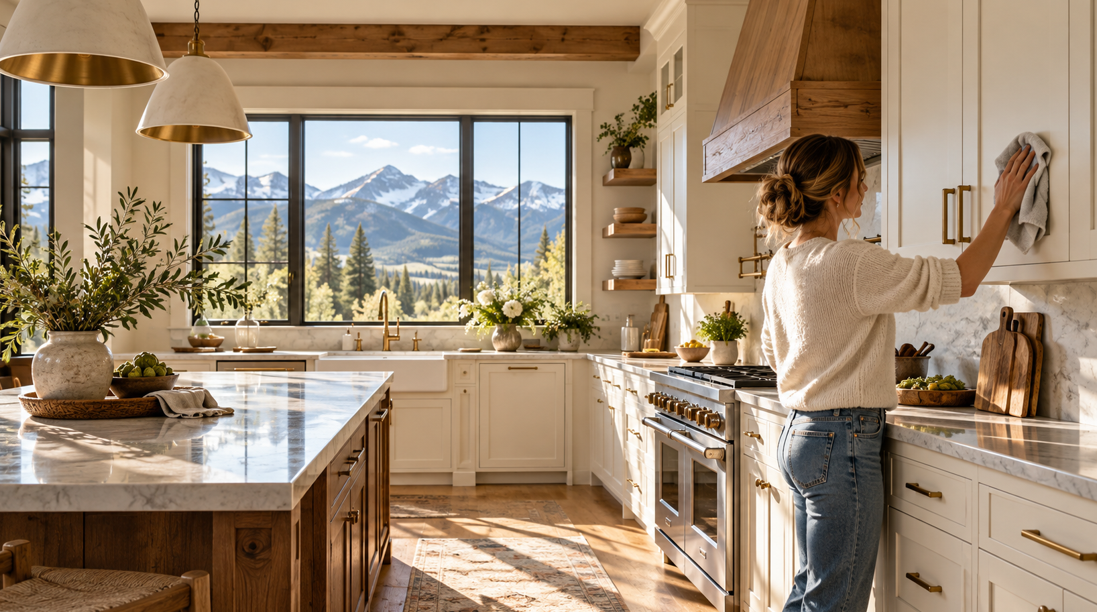
Painted cabinets can bring a clean, polished look to kitchens, bathrooms, mudrooms, and other spaces throughout a Montana home. From crisp white and warm cream to deep blue, sage green, and charcoal, painted cabinetry gives homeowners plenty of flexibility when shaping the look of a room.
In Western Montana, however, climate plays a bigger role in cabinet care than many homeowners realize.
Dry indoor air, seasonal temperature changes, strong sunlight, and regular heating during colder months can all influence how painted wood surfaces age over time. In homes around Missoula, Polson, Superior, Stevensville, and Hamilton, those conditions can contribute to small changes such as hairline gaps, minor movement around cabinet joints, dryness, fading, or finish wear.
That does not mean painted cabinets are a poor choice for Montana homes. With thoughtful care and the right maintenance habits, they can remain beautiful and functional for years.
At Missoula Floors, homeowners can explore cabinet options and finishes that complement the style and practical needs of their homes.
The key is understanding how Montana's dry, high-elevation environment affects painted cabinetry and how simple everyday habits can help protect the finish.
Why Montana's Climate Matters for Painted Cabinets
Wood is a natural material, and natural materials respond to changes in the environment around them.
Even after wood has been shaped, finished, painted, and installed as cabinetry, it can still react to shifts in temperature and humidity.
Dry Air Can Encourage Wood Movement
During dry periods, wood can lose small amounts of moisture and contract slightly.
That movement is usually subtle, but it can sometimes become visible around:
Door panels
Cabinet joints
Frame connections
Mitered corners
Drawer fronts
Homeowners may occasionally notice thin lines where two painted wood components meet.
These small changes do not automatically mean the cabinets are damaged. In many cases, they reflect the natural movement of wood as indoor conditions change.
Heating Can Lower Indoor Humidity
Montana winters often mean extended use of home heating systems.
As indoor air becomes warmer, it can also become drier. That low humidity can affect wood furniture, floors, trim, and cabinetry throughout the home.
The effect can become more noticeable when a kitchen or bathroom experiences repeated shifts between warmer and cooler conditions.
Strong Sunlight Can Affect the Finish
High-elevation homes can receive strong natural light, especially in rooms with large windows.
Over time, direct sunlight can influence painted surfaces by contributing to:
Fading
Uneven color changes
Changes in sheen
Greater contrast between exposed and shaded areas
The effect varies depending on paint color, finish, window placement, and the amount of direct exposure.
Keep Indoor Humidity as Consistent as Practical
One of the most helpful things homeowners can do for painted cabinetry is maintain relatively stable indoor conditions.
Cabinets generally respond better to gradual seasonal changes than extreme swings.
Avoid Very Dry Indoor Air
If indoor air becomes extremely dry during winter, painted wood can contract more noticeably.
A whole-home humidifier or portable humidifier may help improve overall comfort in very dry conditions, depending on the home's needs.
The goal is not to make the home excessively humid. Instead, aim for a more balanced indoor environment that does not swing dramatically between very dry and very damp.
Watch Bathrooms and Laundry Areas
Bathrooms and laundry rooms can experience rapid humidity changes.
Steam from showers or washing can temporarily raise moisture levels, while heating may dry the room again afterward.
Good ventilation helps reduce those extremes.
Use exhaust fans when appropriate and allow moist air to leave the room rather than settling around cabinetry.
Do Not Treat Humidity as a Cabinet-Only Issue
Stable indoor humidity can also support the condition of:
Hardwood flooring
Wood trim
Furniture
Interior doors
Other natural wood finishes
That makes humidity management a whole-home consideration rather than a maintenance step limited to cabinetry.
Clean Painted Cabinets Gently and Regularly
Painted cabinets rarely need aggressive cleaning.
In fact, overly harsh cleaning is one of the easiest ways to wear down a painted finish unnecessarily.
Start With a Soft Cloth
For everyday cleaning, use a soft microfiber cloth or another non-abrasive material.
Light wiping helps remove:
Dust
Fingerprints
Food residue
Light grease
Bathroom splashes
Frequent gentle cleaning usually works better than allowing buildup to collect and then using stronger products later.
Use Mild Cleaning Products
When water alone is not enough, use a gentle cleaning solution suitable for painted cabinetry.
Avoid products that contain harsh abrasives or strong chemicals unless they are specifically approved for the cabinet finish.
Strong cleaners can dull the surface or gradually wear through the protective finish.
Do Not Scrub Aggressively
Painted cabinets can be durable, but repeated heavy scrubbing may damage the sheen or create visible worn spots.
For stubborn residue:
Apply a small amount of mild cleaner to a soft cloth.
Gently work on the affected area.
Wipe away the cleaner.
Dry the surface afterward.
Avoid soaking the cabinet or leaving moisture sitting on the finish.
Control Kitchen Grease Before It Builds Up
Kitchen cabinets face a different type of wear than bathroom or bedroom cabinetry.
Cooking oils, steam, food particles, and fingerprints can gradually create a film across cabinet doors and drawer fronts.
Focus on High-Touch Areas
Certain parts of the kitchen usually need cleaning more frequently.
Pay extra attention to:
Cabinet pulls
Drawer handles
Areas around the stove
Cabinets near the sink
Doors near food preparation areas
Lower cabinets that children or pets may touch
Regular light cleaning prevents residue from becoming more difficult to remove later.
Use Your Range Hood
A properly used range hood can help reduce the amount of airborne grease and cooking moisture that settles onto nearby surfaces.
Switch it on when cooking, especially when frying or preparing foods that create more steam or grease.
This supports both cabinet cleanliness and overall kitchen air quality.
Wipe Spills Promptly
Painted cabinetry is better protected when spills are cleaned before they have time to dry or soak around joints.
Common examples include:
Cooking oil
Coffee
Sauces
Soap
Toothpaste
Cosmetics
Cleaning products
Quick attention usually requires less scrubbing later.
Protect Painted Cabinets From Excess Moisture
Montana's overall climate may be dry, but kitchens and bathrooms still expose cabinetry to water.
Paint protects the surface, yet prolonged moisture exposure can still create problems.
Dry Water Around Sinks
Cabinets near kitchen and bathroom sinks tend to receive the most splashes.
Wipe up water around:
Cabinet edges
Drawer fronts
Door seams
Countertop joints
Sink bases
Pay particular attention where painted wood meets another material.
Check for Slow Plumbing Leaks
A small plumbing leak inside a vanity or sink cabinet may go unnoticed for a long time.
Periodically check underneath sinks for:
Dampness
Water stains
Swollen materials
Musty odors
Dripping connections
Early attention can help protect the cabinet and surrounding finishes.
Let Bathrooms Vent Properly
After showers, allow humidity to escape.
Using ventilation and leaving the room open when appropriate can help reduce prolonged exposure to steam.
This is especially useful for painted bathroom cabinets located close to showers or tubs.
Protect Cabinets From Strong Montana Sunlight
Natural light can make a kitchen or bathroom feel brighter and more inviting, but intense direct sunlight can gradually affect painted finishes.
Notice Which Cabinets Receive the Most Sun
Look at your room at different times of day.
Cabinet doors near west- or south-facing windows may receive significantly more direct exposure than the rest of the room.
Over time, those areas may age differently from cabinetry that remains shaded.
Use Window Coverings When Needed
Blinds, shades, curtains, or other window coverings can help control intense sunlight during peak periods.
You do not need to keep the room dark. Even partial filtering during the strongest hours can reduce continuous direct exposure.
Think About Color Selection
Some colors show fading or changes in sheen more readily than others.
If you are planning new cabinets, consider how the selected paint color will interact with the room's natural light.
A cabinet finish that looks beautiful in a shaded sample area may appear noticeably different in strong afternoon sunlight.
Viewing samples in the actual room is one of the most useful steps you can take before making a final decision.
Prevent Chips, Dents, and Everyday Wear
Climate is only part of cabinet maintenance. Everyday use also affects painted surfaces.
Use Hardware Instead of Pulling on Doors
Cabinet pulls and handles help reduce direct contact with painted surfaces.
When homeowners repeatedly grab the edge of a cabinet door instead of the hardware, oils from the skin and friction can gradually wear the finish.
Using the hardware consistently helps protect high-touch areas.
Avoid Slamming Doors and Drawers
Repeated impact can contribute to:
Paint chipping
Loose hardware
Misaligned doors
Wear around cabinet edges
Soft-close hinges and drawer slides can help reduce impact, especially in busy kitchens.
Keep Sharp Objects Away From Cabinet Fronts
Keys, tools, metal utensils, and other hard objects can scratch or chip painted surfaces.
Be especially careful around kitchen islands, mudrooms, and lower cabinets where bags, shoes, equipment, or household items may regularly brush against the cabinetry.
Watch Cabinet Joints During Seasonal Changes
Painted wood cabinetry can show natural movement more visibly than stained wood because the solid paint color makes small lines easier to notice.
Hairline Lines Can Appear Around Panels
Some cabinet doors are constructed from multiple pieces of wood.
As wood expands and contracts, faint lines may appear where those pieces meet.
These lines can be more noticeable on:
White cabinets
Light-colored cabinets
Shaker-style doors
Framed cabinet fronts
Minor seasonal movement can be normal.
Do Not Rush to Repaint Every Small Line
If a small line appears during a dry season, immediately touching it up may not always be the best response.
The wood may move again when indoor conditions change.
Instead, monitor the area and determine whether the change is cosmetic and seasonal or whether there is actual damage that needs attention.
Pay Attention to Larger Changes
If you notice significant cracking, swelling, peeling, loose components, or persistent changes that continue to worsen, it may be worth having the cabinetry assessed.
The goal is to distinguish minor seasonal movement from an issue that requires repair.
Clean Cabinet Hardware Without Damaging the Paint
Hardware is easy to overlook, but pulls and knobs collect oils and residue quickly.
Clean Hardware Carefully
For routine cleaning, wipe hardware with a soft cloth and a product suitable for its finish.
Avoid spraying cleaner directly onto the cabinet front.
Instead:
Apply cleaner to the cloth.
Wipe the hardware.
Dry the surrounding area.
Check that no moisture remains around mounting points.
This helps prevent cleaner from dripping across painted surfaces.
Tighten Loose Hardware Gently
Cabinet pulls can loosen gradually with use.
If a screw becomes loose, tighten it carefully rather than allowing the handle to move repeatedly against the painted door or drawer.
Over-tightening can also create damage, so only tighten enough to secure the hardware.
Be Careful With Heat Around Painted Cabinetry
Painted cabinets near ovens, ranges, dishwashers, and other appliances may experience more heat than cabinetry elsewhere in the home.
Keep Appliances Properly Installed
Appliances designed to sit beside cabinetry normally include clearances and ventilation requirements.
Following manufacturer installation guidance helps keep surrounding surfaces from being exposed to unnecessary heat.
Be Cautious With Small Countertop Appliances
Toasters, kettles, slow cookers, and similar appliances can generate heat or steam.
Avoid positioning them so hot air or steam is directed continuously onto the underside or face of painted cabinets.
Moving a steaming appliance slightly forward while it is in use can help protect the cabinet above it.
Watch Dishwasher Steam
When a dishwasher cycle finishes, hot steam may escape when the door is opened.
Avoid allowing concentrated steam to rise against painted cabinet surfaces for extended periods.
Touch Up Small Marks Before They Become More Noticeable
Even carefully maintained cabinets may develop minor chips or scratches over time.
Keep Paint Information
When installing painted cabinetry, keep a record of:
Paint color
Manufacturer
Finish or sheen
Cabinet collection
Any available touch-up product information
This can make future repairs much easier.
Use Touch-Up Products Sparingly
A very small chip may only need a small amount of matching touch-up paint.
Applying too much can create a raised patch that becomes more noticeable than the original mark.
Follow the cabinet manufacturer's care recommendations whenever possible.
Know When Professional Refinishing Makes More Sense
If multiple doors are heavily worn, peeling, or unevenly faded, repeated spot repairs may not create a consistent finish.
At that point, professional refinishing or replacement may offer a cleaner long-term result.
Create a Simple Seasonal Cabinet Care Routine
Painted cabinetry is easier to maintain when care becomes routine rather than something done only when a problem appears.
During Winter
Check for:
Extremely dry indoor air
New hairline gaps
Loose hardware
Heat exposure near appliances
Dry residue collecting on cabinet surfaces
Gently clean high-touch areas and monitor any seasonal wood movement.
During Spring
Use the season as an opportunity for a more thorough inspection.
Clean:
Door fronts
Drawer fronts
Cabinet sides
Hardware
Areas near sinks and appliances
Look for any signs of moisture from winter plumbing issues or condensation.
During Summer
Pay closer attention to sunlight.
Notice whether certain cabinet sections receive strong direct exposure for several hours each day and adjust window coverings if needed.
During Fall
Before heating season begins, inspect cabinetry and note its current condition.
This gives you a useful baseline for identifying any changes that occur during the drier winter months.
Common Painted Cabinet Maintenance Mistakes to Avoid
Good maintenance is often about avoiding unnecessary wear.
Using Abrasive Cleaners
Scrubbing powders, rough pads, and aggressive chemicals can damage painted finishes.
Gentle products and soft materials are usually the better approach.
Leaving Water Sitting on Cabinet Surfaces
Even durable painted cabinets benefit from prompt drying around sinks and bathrooms.
Ignoring Grease for Months
Grease becomes harder to remove as it builds up.
Regular light cleaning helps preserve the finish and reduces the need for stronger cleaners later.
Letting Hardware Stay Loose
A loose handle can repeatedly rub against the door or drawer and damage the surrounding finish.
Exposing Cabinets to Constant Direct Steam
Steam from kettles, dishwashers, showers, or cooking can increase moisture exposure in localized areas.
Treating Every Seasonal Line as Serious Damage
Small changes around wood joints can occur as indoor conditions shift.
Monitor them before assuming the cabinet needs major repair.
Keep Painted Cabinets Looking Beautiful in Western Montana
Painted cabinets can work beautifully in Montana homes, from warm mountain-modern kitchens to bright bathrooms and practical mudrooms.
The most effective maintenance approach is straightforward: keep indoor conditions relatively stable, clean surfaces gently, control moisture, protect cabinets from excessive heat and direct sunlight, and pay attention to small changes before they become larger concerns.
Montana's dry climate and seasonal temperature shifts can influence natural wood, but thoughtful care can help painted cabinetry continue to look polished and perform well.
It is also worth remembering that cabinet maintenance begins with the selection process. Choosing the right finish, color, hardware, layout, and materials for the way the room is actually used can make ongoing care much easier.
Missoula Floors works with homeowners throughout Western Montana who want cabinetry that suits both the look of their home and the realities of everyday use.
If you are updating painted cabinets or planning a new kitchen, bathroom, mudroom, or storage area, get in touch with the Missoula Floors team to explore cabinet styles and finishes that fit your space.