
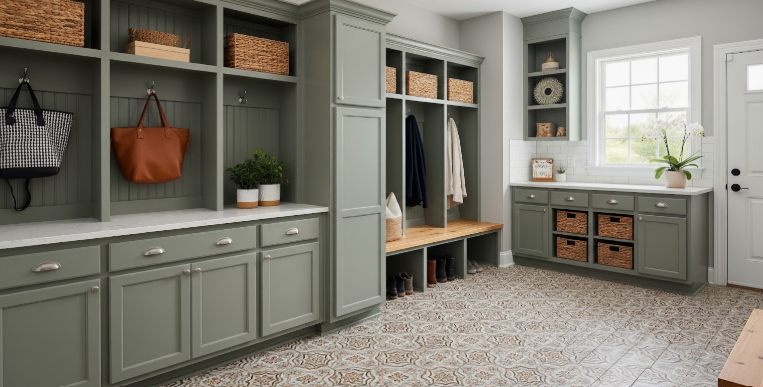
Why Mudrooms Matter in Montana Homes
Mudrooms might not be the biggest space in a home, but they’re often one of the hardest-working. In Western Montana, where outdoor living is part of daily life, entryways quickly fill with boots, jackets, backpacks, and gear from every season. Without a plan, this area can become cluttered and chaotic fast. A well-designed mudroom changes that experience completely by creating a space that feels organized, welcoming, and easy to maintain.
In places like Hamilton and Stevensville, mudrooms serve as the transition between rugged outdoor conditions and comfortable indoor living. Snow in winter, muddy spring trails, and outdoor adventures year-round mean families need storage that works as hard as they do. Built-in cabinetry brings structure to this high-traffic area, helping homeowners keep everything in its place without sacrificing style.
At Missoula Floors, homeowners often discover that a thoughtful mudroom design doesn’t just improve organization — it improves daily routines. When coats, shoes, and everyday essentials have dedicated storage, mornings feel smoother and the home stays cleaner.
A mudroom can also set the tone for the rest of the house. Instead of feeling like a forgotten corner, it becomes a functional design feature that reflects the personality of the home. With the right layout and built-in cabinetry, even a small entry area can feel intentional, polished, and ready for whatever Montana weather brings.
Step 1: Planning the Layout Before Choosing Cabinets
Before selecting cabinet styles or finishes, it helps to step back and think about how the space will actually be used. A successful mudroom starts with smart planning, not product selection.
Identify Who Uses the Space Every Day
Every household is different. Some homes need storage for kids’ school bags and sports gear, while others prioritize outdoor equipment or pet supplies. Thinking about daily users helps shape cabinet size, height, and layout.
Map Out Entry and Exit Paths
Traffic flow matters. People entering with groceries or gear need clear movement without bumping into benches or doors. Cabinet placement should support smooth movement rather than creating bottlenecks.
Decide What Needs Storage
Take inventory of what typically ends up near the door. Shoes, coats, hats, cleaning supplies, and seasonal items all benefit from dedicated spaces. Planning for these items early helps avoid overcrowded cabinets later.
Include Seating and Drop Zones
A built-in bench makes putting on boots easier and adds comfort to the space. Small countertop areas or open surfaces create convenient spots to set keys, bags, or mail when coming home.
Planning first ensures the mudroom supports real life instead of forcing homeowners to adapt to a layout that doesn’t fit their routine.
Step 2: Choosing Built-In Cabinetry That Works Every Day
Built-in cabinetry is the foundation of a functional mudroom. The right design balances accessibility with organization, helping the space stay clean without constant effort.
Open Cubbies vs Closed Cabinets
Open cubbies make it easy to grab frequently used items, especially for kids or active households. Closed cabinets help maintain a tidy appearance by hiding clutter. Many homeowners choose a combination of both for flexibility.
Tall Cabinets for Seasonal Storage
Vertical storage is often underused. Tall cabinets provide space for seasonal gear like snow boots, heavy coats, or camping equipment, keeping them out of sight when not in use.
Built-In Benches With Storage
Benches with drawers or lift-up lids add hidden storage while creating a comfortable seating area. This simple feature adds both practicality and visual balance.
Hooks, Drawers, and Adjustable Shelves
Hooks are perfect for everyday jackets and bags, while drawers keep smaller items organized. Adjustable shelving allows the mudroom to evolve as family needs change.
Homeowners exploring custom cabinets often find that thoughtful built-in features make the difference between a space that looks good and one that truly works.
Step 3: Selecting Durable Materials for Montana Conditions
Montana weather demands durable materials, especially in entry spaces where moisture and dirt are unavoidable. Choosing cabinetry designed to handle everyday use helps keep the mudroom looking fresh over time.
Moisture-Resistant Finishes
Wet jackets and snowy boots are common in winter months. Cabinet finishes that resist moisture help prevent wear and maintain appearance longer.
Easy-to-Clean Surfaces
Smooth, durable surfaces simplify cleaning. A quick wipe-down should be enough to keep cabinets looking polished after a busy day outdoors.
Scratch-Resistant Materials
Pets, gear, and heavy use can leave marks over time. Durable cabinet materials help maintain a beautiful appearance even in active households.
Timeless Colour Choices
Neutral tones and natural wood-inspired finishes often work best in Montana homes. They feel warm, inviting, and easy to coordinate with other design elements.
Selecting materials that balance style and durability ensures the mudroom remains functional without feeling overly utilitarian.
Step 4: Smart Storage Ideas That Keep Mudrooms Organized
Great storage design turns a mudroom from a catch-all area into a calm, organized space. Built-in cabinetry allows homeowners to tailor storage to their specific lifestyle.
Individual Zones for Family Members
Assigning each person a dedicated section helps reduce clutter. Individual cubbies or drawers make it easier for everyone to stay organized.
Hidden Storage for Visual Calm
Cabinet doors create a cleaner appearance by concealing everyday items that might otherwise make the space feel messy.
Vertical Storage for Boots and Gear
Tall compartments help keep bulky outdoor equipment organized while saving floor space.
Dedicated Pet Areas
Built-in drawers for leashes, bowls, or pet supplies keep everything accessible without cluttering the room.
When storage reflects how people actually live, the mudroom becomes easier to maintain and more enjoyable to use.
Step 5: Designing a Mudroom That Feels Connected to the Home
A mudroom doesn’t have to feel separate from the rest of the house. Thoughtful design choices help create continuity so the space feels intentional rather than purely functional.
Match Cabinet Styles With Nearby Rooms
Using similar finishes or design elements found in kitchens or entryways helps maintain visual flow throughout the home.
Hardware That Adds Personality
Handles and knobs may seem small, but they influence the overall feel. Durable finishes like matte black or brushed metal often complement mountain-inspired interiors.
Lighting That Improves Functionality
Good lighting makes the space safer and more welcoming. Layered lighting helps highlight cabinetry while making everyday tasks easier.
Flooring and Cabinet Coordination
Choosing materials that complement each other creates a cohesive look. Flooring and cabinetry should feel balanced rather than competing for attention.
Design consistency helps the mudroom feel like an extension of the home rather than an afterthought.
Step 6: Common Mudroom Design Mistakes to Avoid
Even well-intentioned designs can fall short if certain details are overlooked. Avoiding common mistakes helps ensure long-term satisfaction.
Not Planning Enough Storage
Mudrooms fill up quickly. Adding more storage than you think you need often pays off later.
Ignoring Daily Habits
Design decisions should reflect real routines. Storage that looks good but doesn’t match daily use quickly becomes frustrating.
Choosing Style Over Function
A beautiful mudroom still needs to handle dirt, moisture, and heavy use. Balancing style with practicality creates lasting value.
Forgetting Future Needs
Families grow and routines change. Flexible cabinetry allows the space to adapt over time without major renovations.
Avoiding these mistakes keeps the mudroom practical, stylish, and ready for everyday life.
Bringing Your Mudroom Vision to Life With Built-In Cabinetry
A functional mudroom does more than store shoes and coats. It creates order, supports busy routines, and makes coming home feel easier. Built-in cabinetry transforms what could be a cluttered entry into a space that feels calm and thoughtfully designed.
When cabinets are planned with real-life use in mind, the result is a mudroom that works beautifully year-round — from snowy boots in winter to hiking gear in summer. It becomes a space that supports the way your family lives while adding lasting style to your home.
If you’re ready to create a mudroom that blends organization with beautiful design, reach out to us. A knowledgeable team can help you plan cabinetry that fits your lifestyle and brings your vision to life.