
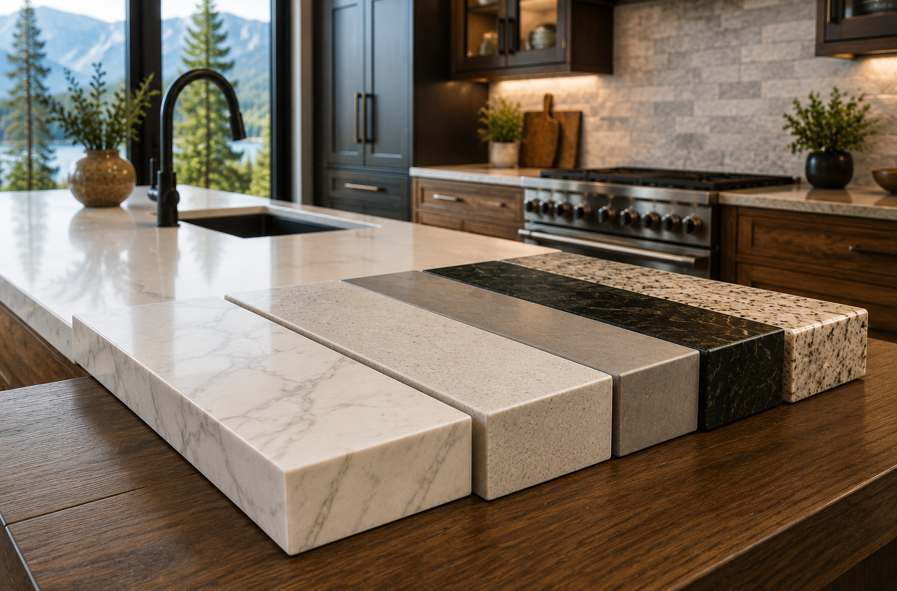
Why Countertop Thickness Matters More Than Most Homeowners Realise
When planning a kitchen remodel, many homeowners focus heavily on countertop color, material, or edge style. But one design detail that often gets overlooked is countertop thickness. Surprisingly, the thickness of your countertops can dramatically influence how your kitchen looks, feels, and functions.
Across Missoula, Polson, Stevensville, Superior, and Hamilton, homeowners are increasingly paying attention to countertop profiles because modern kitchen design has become more detail-oriented. A thicker countertop can create a bold luxury statement, while thinner surfaces often support sleek contemporary aesthetics.
Countertop thickness also impacts:
Visual weight
Installation requirements
Edge profiles
Material performance
Budget
Cabinet support
Overall kitchen style
In mountain homes throughout Western Montana, countertop thickness choices are often influenced by rustic-modern design trends, natural lighting, large kitchen islands, and open-concept layouts.
At Missoula Floors, many homeowners are exploring countertop thickness options that balance durability, aesthetics, and practical everyday use. The right choice depends on your kitchen style, material selection, budget, and how you want the finished space to feel.
This guide explains the most common countertop thickness options, how different materials influence thickness decisions, and which styles work best in modern Montana kitchens.
Understanding Standard Countertop Thickness Options
The Most Common Thickness Measurements
Most kitchen countertops are available in several standard thicknesses, though the exact measurements vary slightly depending on material type.
The most common countertop thicknesses include:
2 centimeters (approximately 3/4 inch)
3 centimeters (approximately 1 1/4 inches)
Some specialty surfaces may also use:
Ultra-thin profiles
Built-up edges
Extra-thick statement designs
Each option creates a completely different visual effect in the kitchen.
Thin Countertops Create a Modern Look
Thinner countertops have become increasingly popular in contemporary and minimalist kitchens. They create a streamlined appearance with cleaner lines and less visual bulk.
This style works especially well in:
Modern homes
Scandinavian-inspired interiors
Minimalist kitchens
Open-concept spaces
Contemporary mountain homes
Thin profiles often make kitchens feel lighter and more architectural.
Thicker Countertops Feel More Traditional and Luxurious
Thicker countertops tend to create a stronger visual presence. They often feel:
More substantial
More dramatic
More luxurious
More classic
This style works beautifully in larger Montana homes where kitchen islands become major focal points.
How Different Countertop Materials Influence Thickness
Quartz Countertops
Quartz remains one of the most popular kitchen surfaces because it combines durability with design flexibility.
Quartz countertops commonly come in:
2cm profiles
3cm profiles
Thicker quartz slabs are especially popular in luxury kitchens because they create a fuller, more substantial appearance without requiring additional edge buildup.
Many homeowners choose thicker quartz for:
Large islands
Family kitchens
Luxury remodels
Waterfall edges
Granite Countertops
Granite countertops traditionally use thicker slab profiles because natural stone benefits from additional structural support.
3cm granite is especially common because it:
Provides strong durability
Requires less plywood support
Creates a premium appearance
Granite’s natural variation also pairs beautifully with thicker edges in rustic and mountain-inspired kitchens.
Porcelain Countertops
Porcelain countertops often use thinner profiles because the material itself is extremely dense and durable.
Thin porcelain surfaces work particularly well in:
Contemporary kitchens
Minimalist interiors
Modern mountain homes
They create sleek visual lines while maintaining impressive performance.
Marble and Quartzite
Luxury natural stones like marble and quartzite are often installed in thicker profiles to highlight their dramatic veining and visual depth.
These materials frequently appear in:
High-end homes
Statement islands
Custom kitchens
Luxury mountain properties
The Visual Impact of Countertop Thickness
Thick Countertops Create Bold Focal Points
A thick countertop naturally draws attention. In kitchens with large islands or open layouts, thicker surfaces help anchor the space visually.
This is especially useful in:
Open-concept homes
Luxury kitchens
Homes with vaulted ceilings
Large entertaining spaces
The countertop becomes more than a surface — it becomes a major architectural feature.
Thin Countertops Feel Sleeker and More Contemporary
Thin profiles create cleaner visual lines and a more understated appearance.
Many homeowners choose thinner countertops because they:
Feel modern
Minimize visual heaviness
Work well with flat-panel cabinetry
Support minimalist aesthetics
This design approach has become increasingly popular in modern Montana homes that blend contemporary design with natural materials.
Countertop Thickness Influences Lighting and Space Perception
Thicker countertops visually lower the eye line slightly, which can make kitchens feel more grounded and substantial.
Thinner surfaces reflect light differently and often help kitchens feel more open and airy.
This becomes especially important in kitchens with:
Limited natural light
Smaller footprints
Lower ceilings
Which Thickness Works Best for Different Kitchen Styles?
Mountain-Modern Kitchens
Mountain-modern kitchens often balance rustic textures with contemporary simplicity.
Popular countertop choices include:
3cm quartz
Thick waterfall islands
Natural stone surfaces
Warm neutral palettes
Thicker countertops help reinforce the luxury and warmth these homes are known for.
Contemporary Minimalist Kitchens
Minimalist kitchens usually favour thinner countertop profiles because they create cleaner lines and less visual clutter.
Thin porcelain or quartz surfaces pair beautifully with:
Flat-panel cabinets
Integrated appliances
Matte finishes
Minimal hardware
Rustic and Traditional Kitchens
Rustic kitchens often benefit from thicker countertops because they complement heavier wood cabinetry, natural textures, and traditional architecture.
Granite and quartzite frequently work well in these spaces.
Transitional Kitchens
Transitional kitchens blend classic and modern design elements together.
In these homes, countertop thickness often depends on balancing:
Cabinet style
Hardware finishes
Lighting
Flooring
Island design
Many homeowners choose moderate thicknesses that feel timeless rather than overly trendy.
Waterfall Islands and Countertop Thickness
Why Thickness Matters for Waterfall Designs
Waterfall islands continue growing in popularity throughout luxury Montana homes. In these designs, the countertop material flows vertically down the sides of the island for a seamless appearance.
Countertop thickness becomes especially important because it directly affects:
Visual drama
Edge appearance
Modern styling
Material continuity
Thick Waterfalls Feel More Dramatic
Thicker waterfall edges create a bold luxury statement that works beautifully in larger kitchens.
This style pairs well with:
Large open-concept layouts
High ceilings
Luxury finishes
Statement lighting
Thin Waterfalls Create a Cleaner Contemporary Look
Thin waterfall profiles feel more architectural and understated.
Many homeowners prefer this style because it:
Feels modern
Creates visual simplicity
Supports minimalist interiors
Cabinet Support and Structural Considerations
Heavier Countertops Require Proper Support
Thicker countertops naturally weigh more, especially when using granite, quartzite, or marble.
Proper cabinet support becomes essential for:
Large islands
Overhangs
Extended seating areas
Heavy stone materials
Professional installation helps ensure everything is supported correctly.
Cabinet Quality Matters
High-quality cabinetry helps support heavier countertop installations safely long-term.
Many homeowners selecting premium countertops also invest in durable cabinetry designed to handle the weight and demands of luxury kitchen materials.
Overhangs May Require Extra Reinforcement
Kitchen islands with extended seating often require hidden brackets or additional support systems depending on countertop thickness and material.
This is especially important in family kitchens where islands see heavy daily use.
Edge Profiles and Thickness Go Hand in Hand
Simple Edges Work Well With Thin Countertops
Thin countertops usually pair best with clean edge styles such as:
Straight edges
Eased edges
Minimal bevels
These profiles reinforce modern design aesthetics.
Decorative Edges Pair Better With Thicker Surfaces
Thicker countertops support more traditional edge details like:
Ogee edges
Dupont edges
Beveled profiles
These styles work well in classic and luxury-inspired kitchens.
Built-Up Edges Create Visual Thickness
Some homeowners prefer thinner slabs with built-up edges that create the illusion of thicker countertops.
This technique allows for:
More visual drama
Reduced material weight
Contemporary styling flexibility
Countertop Thickness and Budget Considerations
Thicker Countertops Usually Increase Cost
In many cases, thicker slabs cost more because they require:
Additional material
More fabrication work
Increased transportation handling
Stronger installation support
Luxury edge details can also increase pricing.
Thin Profiles May Reduce Material Costs
Some thinner countertop options offer savings on both material and installation.
However, pricing still depends heavily on:
Material type
Slab availability
Fabrication complexity
Installation requirements
Long-Term Value Matters More Than Initial Cost
Countertops are long-term investments. Choosing the right thickness often matters more than finding the least expensive option.
A kitchen that feels balanced, functional, and visually timeless typically creates stronger long-term satisfaction.
How Natural Light Influences Countertop Thickness Choices
Large Windows Change Visual Balance
Many Montana homes feature expansive windows and strong natural light. These architectural features influence how countertop thickness appears throughout the space.
Thicker countertops often feel more balanced in:
Bright open-concept kitchens
Large homes
Vaulted spaces
Thin Profiles Reflect Light Differently
Thin countertops often create softer visual transitions that help kitchens feel lighter and more contemporary.
This can work beautifully in homes seeking:
Scandinavian influence
Modern simplicity
Minimalist design
Questions Homeowners Should Ask Before Choosing Countertop Thickness
Before finalizing countertop selections, homeowners should consider:
How modern or traditional should the kitchen feel?
Will the island become a major focal point?
How much natural light does the kitchen receive?
What cabinet style is being used?
Which countertop material fits the lifestyle best?
Is the goal understated elegance or bold visual impact?
Will the kitchen prioritize entertaining or daily family use?
Answering these questions helps narrow the best design direction.
Choosing a Countertop Thickness That Fits Your Montana Kitchen
Countertop thickness may seem like a small detail initially, but it plays a major role in the overall appearance and functionality of a kitchen. The right profile helps balance cabinetry, lighting, layout, and architectural style while supporting the way homeowners actually use the space every day.
In Western Montana homes, countertop thickness choices often reflect a blend of luxury, practicality, and mountain-inspired design. Whether you prefer sleek contemporary lines or bold statement surfaces, the right thickness can completely transform how a kitchen feels.
If you’re planning a kitchen remodel and want help selecting surfaces that fit your style, layout, and lifestyle, reach out to us to explore countertop options designed for modern Montana living.